Best for
Pesto, pasta, pizza, tomato dishes, salads, sandwiches, Thai-inspired dishes, noodle bowls, cocktails, and fresh finishing.
 All guides
Harvest-Ready Herb Garden
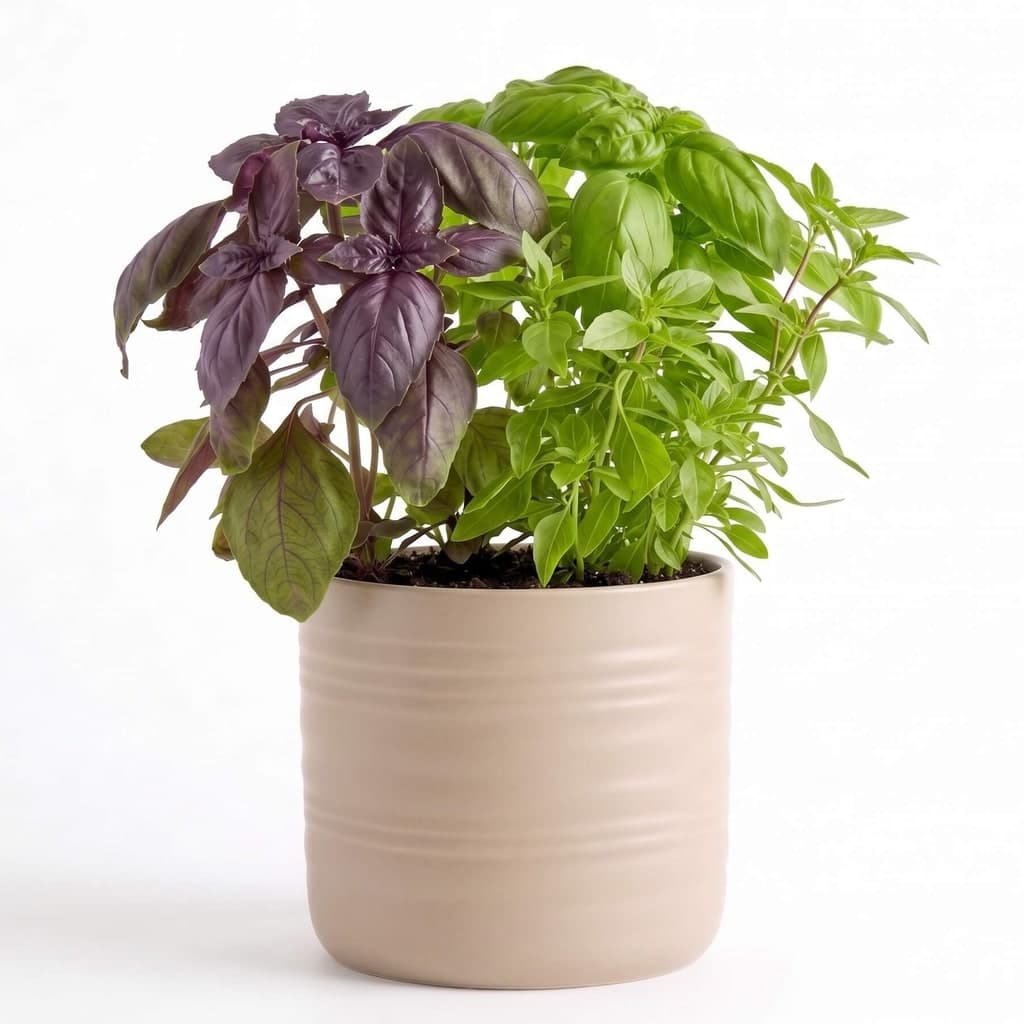
A complete guide to growing and using fresh Genovese basil, Red Genovese basil, and Thai basil.
Start here
Welcome
Most people know basil as the classic herb for pesto, pasta, and tomato dishes — but the world of basil is much more diverse than the familiar bunch at the grocery store.
Genovese basil brings the sweet, classic flavour people know and love. Red Genovese basil adds beautiful colour and a slightly deeper, more aromatic character. Thai basil brings a warmer, spicier flavour with notes of anise and clove, making it perfect for stir-fries, curries, noodle dishes, and fresh summer drinks.
This garden brings together three distinct basils in one pot, giving you a more colourful and flavourful way to explore one of the world’s most beloved culinary herbs.
Your Triple Basil Herb Garden arrives fully grown, pre-potted, and ready to harvest. There is no transplanting, no seed starting, and no guesswork.
Start with a thorough watering in the sink, let it drain, then place it somewhere bright. Your first-day steps are below.
Pesto, pasta, pizza, tomato dishes, salads, sandwiches, Thai-inspired dishes, noodle bowls, cocktails, and fresh finishing.
First day care
Unpack your garden, give it a thorough watering, and find a bright spot to help it settle in.
Unpack your garden as soon as it arrives and remove all packing material. Set any cover pot aside and place the grow pot in the sink.
Run tap water gently over the soil until it is fully saturated and water flows from the drainage holes. Leave the grow pot in the sink for about a minute, or until excess water has finished draining.
Place the drained grow pot inside your cover pot or on a saucer, then set your garden in a bright location. No repotting needed.
Settling in
Your garden grows in a 6.7-inch grow pot that fits inside our optional 7-inch cover pots. Keep your herbs planted in the grow pot; do not plant directly into a cover pot, as it has no drainage holes.
Let your garden adjust for 48 hours before heavier picking. This gives the plants time to settle into their new home.
A few bent stems or tired-looking leaves can happen after shipping. After the first watering, give your herbs bright light and time to settle. Check the soil before watering again.
Light & water
Place your garden in bright natural light, such as a sunny windowsill, kitchen counter near a window, or covered patio. Basil loves warmth and strong light, so choose the brightest comfortable spot you have.
Push a finger about an inch into the soil. If that top inch feels dry, it is time to water. If it still feels damp, wait and check again the next day.
Take the grow pot to the sink, removing any cover pot first. Gently soak the soil with tap water until water flows through the drainage holes. Let it drain for about a minute, or until excess water has finished draining, then return it to your cover pot or saucer.
Turn the pot every few days so all sides receive direct light. This helps the garden grow more evenly and keeps the basil easier to harvest.
Always water the grow pot in the sink. If you use a cover pot, never water directly into it. Empty any water that collects in the cover pot or saucer so the roots do not sit in standing water, which can cause rot.
Meet your herbs
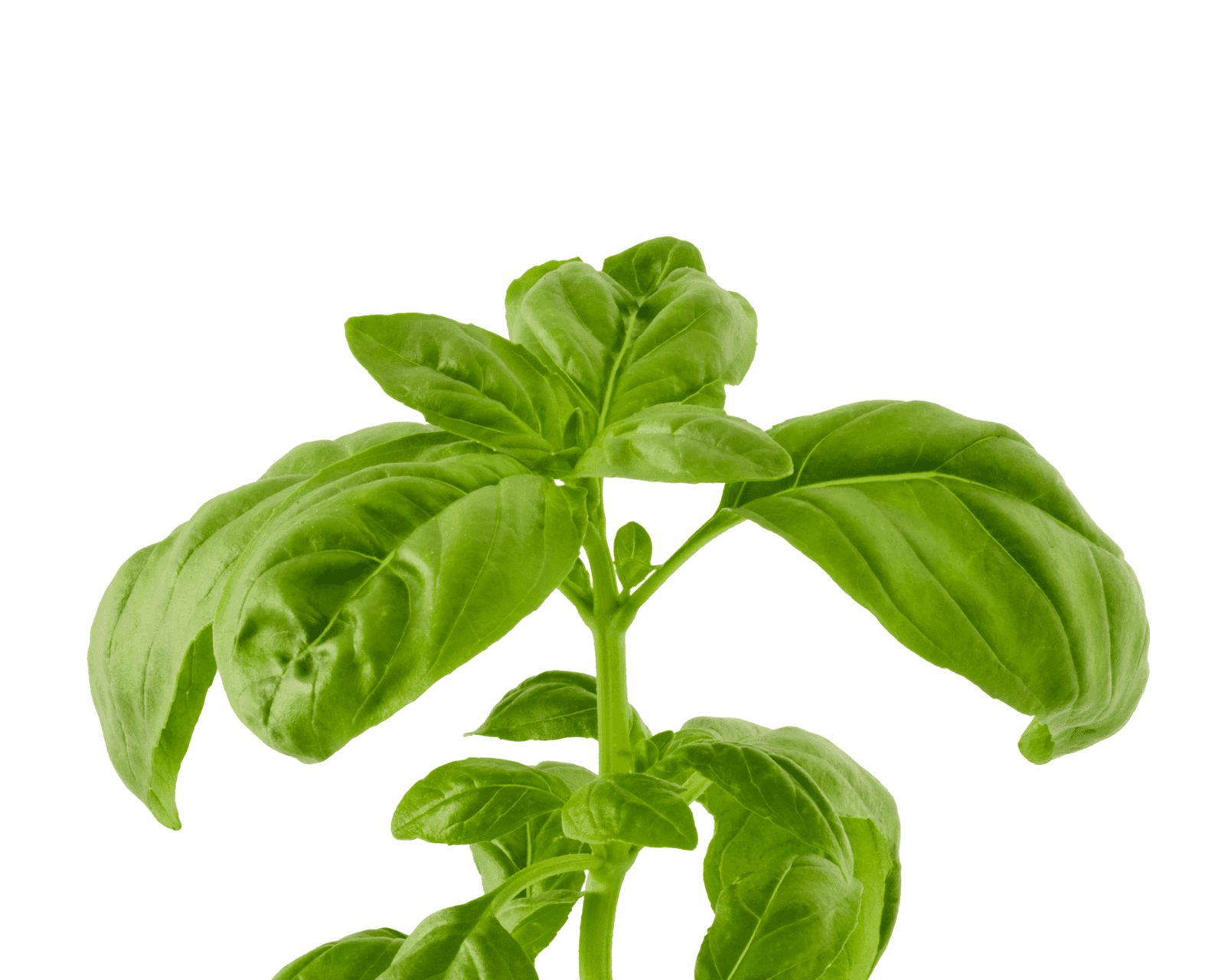
Sweet, fragrant, and classic. Genovese basil is the basil most people know from pesto, tomato sauce, pizza, caprese salad, and Italian cooking.
Genovese basil likes warmth, bright light, and steady moisture. Pinch from the top to keep the plant full and bushy.
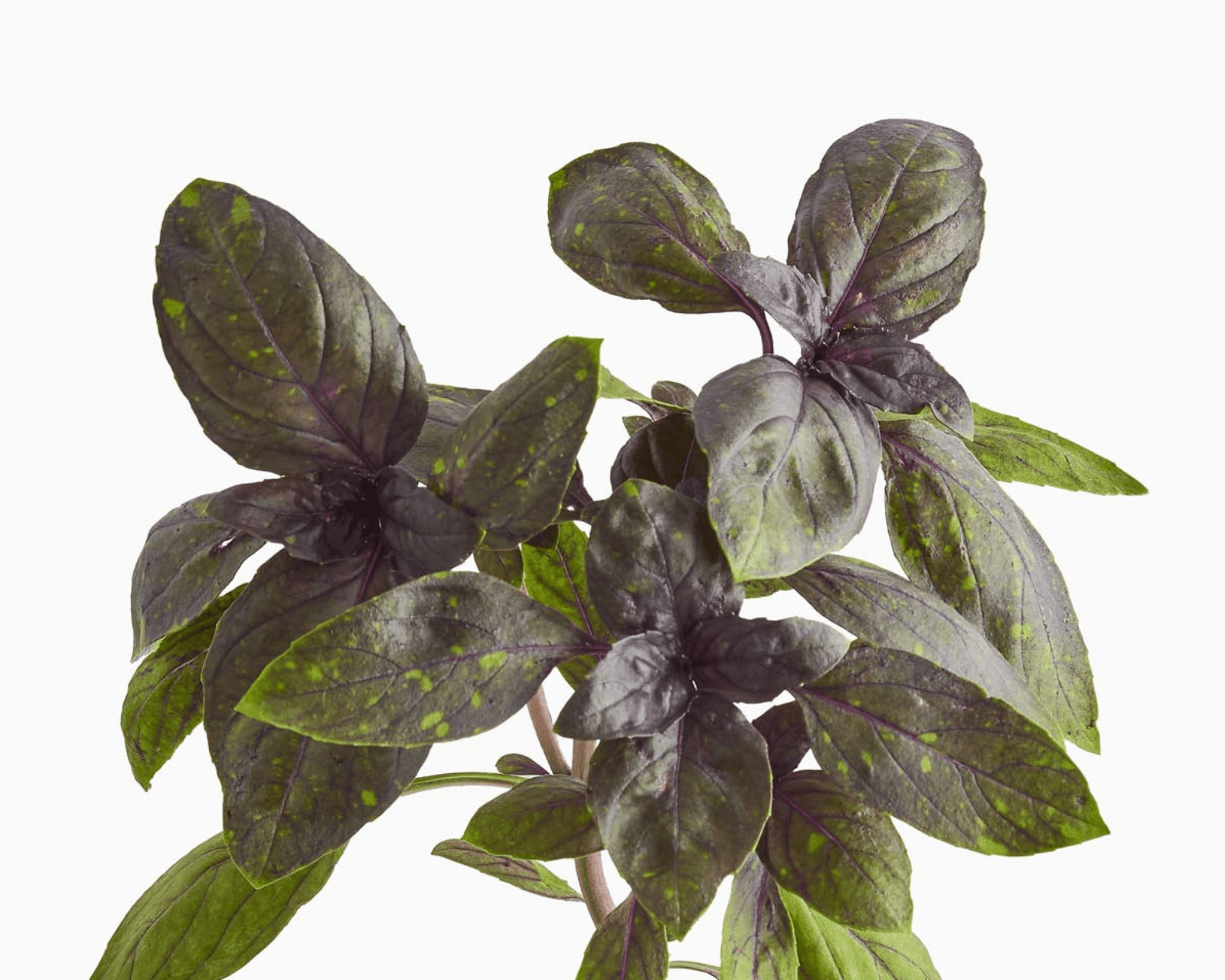
A colourful basil with a classic basil flavour and a slightly deeper, more aromatic character. Its red-purple leaves make simple dishes look more special.
Red basil may grow a little more slowly than green basil. Harvest it regularly, but avoid cutting too much at once so it can keep producing fresh leaves.
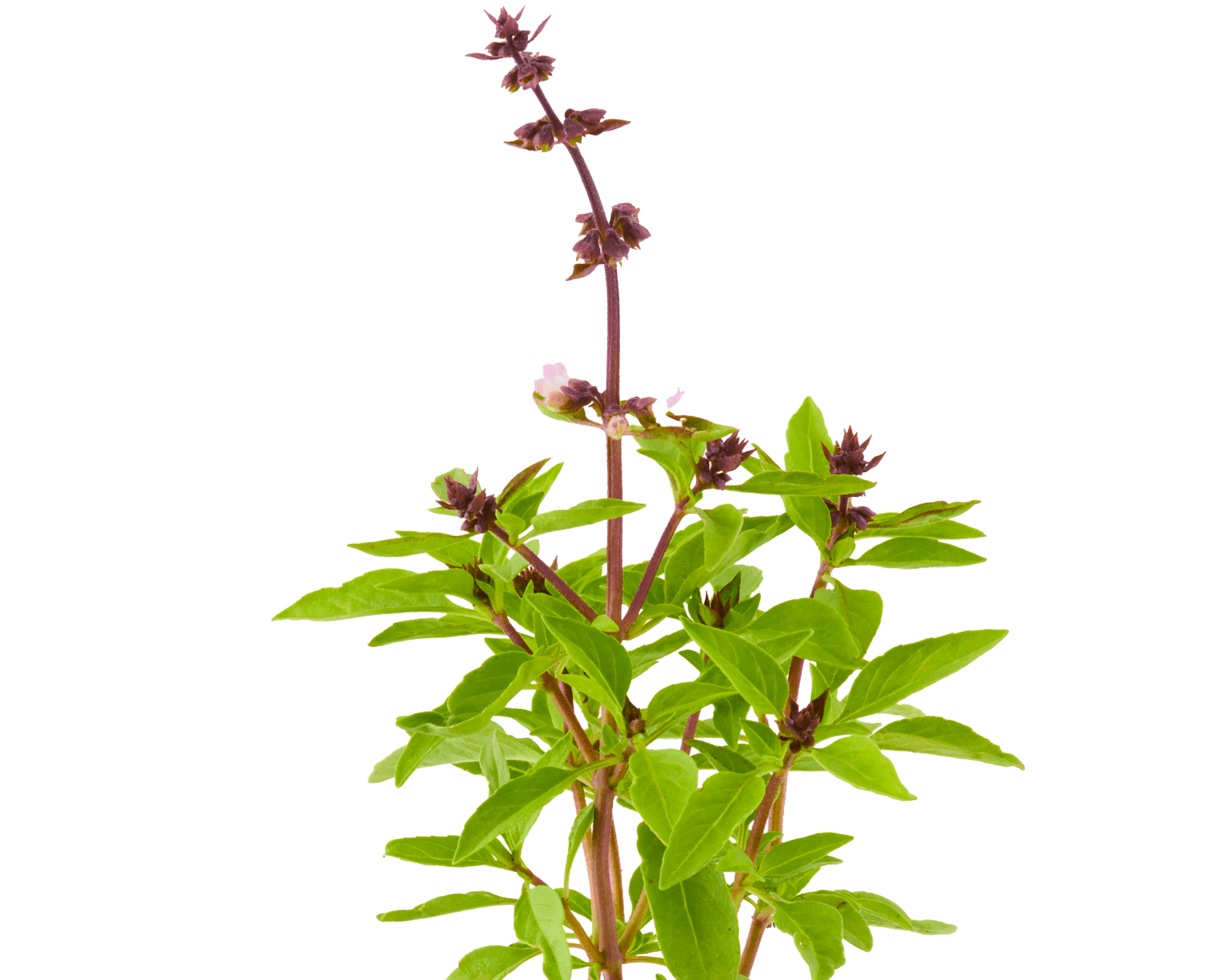
Warm, spicy, and slightly sweet, with notes of anise and clove. Thai basil is especially good in stir-fries, curries, noodle bowls, soups, and fresh rolls.
Thai basil loves warmth and regular harvesting. Pinch off flower buds if they appear so the plant stays focused on leafy growth.
Harvesting
Small, regular harvests are better than one large cut. Use clean scissors or herb snips, take what you need for the meal, and leave plenty of leafy growth behind so the garden can keep producing.
Basil grows fuller when you harvest from the top. Each cut encourages the plant to branch, which helps prevent tall, leggy growth.
Snip the top of a stem just above a pair of leaves. This encourages the plant to branch and grow fuller.
Harvest small amounts from the top of the plant, just above a pair of leaves. Leave enough leaves behind so the plant can continue growing strongly.
Snip the top growth just above a pair of leaves. If flower buds appear, pinch them off to keep the flavour focused in the leaves.
Easy ways to use them
Fresh basil is one of the easiest herbs to use often. You can keep things classic with Genovese basil, add colour with Red Genovese basil, or bring a warmer, spicier flavour with Thai basil.
Basil is often best added near the end of cooking or right before serving. Fresh basil adds aroma, colour, and a clean garden flavour.
Genovese basil is a natural match for tomatoes, mozzarella, parmesan, olive oil, garlic, and pasta. Add basil near the end so its flavour stays fresh.
Thai basil holds its flavour beautifully in bold dishes. It is especially good with garlic, chili, coconut milk, lime, fish sauce, soy sauce, noodles, and stir-fried vegetables. Add Thai basil near the end of cooking or as a fresh garnish.
Simple recipes
Fresh salad
Layer or toss together tomatoes, mozzarella, fresh Genovese basil leaves, olive oil, salt, and black pepper.
This is one of the most classic ways to enjoy fresh basil. Add balsamic vinegar or balsamic glaze if you like.
Pasta
Toss hot spaghetti with olive oil or butter, chopped fresh Genovese basil, grated parmesan, black pepper, and a splash of pasta water.
This is a simple way to use basil without needing to make a full pesto.
Curry
Simmer chicken, tofu, shrimp, or vegetables in Thai green curry sauce with coconut milk. Near the end of cooking, add fresh Thai basil leaves, lime juice, and sliced chili if using. Serve with rice or noodles.
Thai basil adds a warm, aromatic flavour that pairs beautifully with coconut milk, lime, chili, and green curry paste.
Toast
Top toasted slices of bread with chopped tomatoes, chopped fresh basil, olive oil, salt, black pepper, and garlic if using.
This is a classic way to use fresh basil with ripe tomatoes, olive oil, and crusty bread. Add balsamic vinegar, mozzarella, parmesan, or ricotta if you like.
Lifespan & refills
Expect around 1–2 months of fresh herbs, depending on care and how much you harvest. These are living plants, so every garden will grow at its own pace.
Refill every 1–2 months for a fresh supply of herbs. Your new garden arrives in its own grow pot, ready to fit inside the same cover pot.
Remove the old grow pot and compost the old herbs. Water and drain your new garden, then place it in your empty cover pot or on a saucer.
Subscribe to regular refills to save and have a fresh garden delivered every 1–2 months. Keep your cover pot and simply swap in each new garden.
Need a hand?
If anything looks concerning, please reach out to us at support@herbwild.com as soon as possible so we can help. We want you to succeed, and your plants are backed by our 15-day satisfaction guarantee.